Your Split-Brain Personality Test Results Are Based on Outdated Medical Research, Not Modern Neuroscience
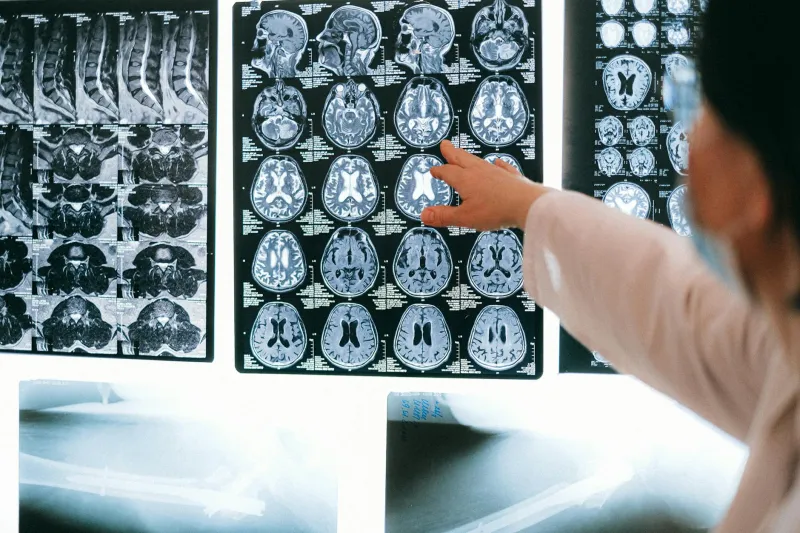
Walk into any office break room or college orientation, and you'll hear someone confidently declare they're "totally left-brained" to explain their love of spreadsheets, or "super right-brained" because they doodle during meetings. This personality sorting system feels so intuitive that it's become workplace small talk, dating app conversation, and the foundation for countless career aptitude tests.
But here's what modern neuroscience has discovered: your brain doesn't work like a personality quiz.
The Real Story Behind Split-Brain Research
The left brain versus right brain concept started with legitimate medical research in the 1960s. Neurosurgeon Roger Sperry studied patients who'd undergone corpus callosotomy — a procedure that severs the connection between brain hemispheres to treat severe epilepsy. These "split-brain" patients showed fascinating behaviors: they could draw with their left hand but not describe what they'd drawn, or identify objects with their right hand but not their left.
 Photo: Roger Sperry, via neupsykey.com
Sperry's work revealed that the hemispheres do have specialized functions. The left hemisphere typically handles language processing and sequential tasks, while the right hemisphere excels at spatial reasoning and pattern recognition. This research was groundbreaking and earned Sperry a Nobel Prize in 1981.
But here's the crucial detail that got lost in translation: these findings applied specifically to people whose brains had been surgically divided. In healthy brains, the corpus callosum — a thick bundle of nerve fibers — connects the hemispheres and allows constant communication between them.
How Medical Research Became Pop Psychology
By the 1970s and 1980s, Sperry's split-brain findings had escaped the laboratory and landed in self-help books and corporate training seminars. Authors like Betty Edwards, who wrote "Drawing on the Right Side of the Brain," popularized the idea that you could tap into your "right-brain creativity" through specific exercises.
 Photo: Betty Edwards, via www.smartweb.de
The concept was irresistible: it offered a simple explanation for complex human differences. Logical, analytical people were "left-brained." Creative, intuitive people were "right-brained." It explained why some people excelled at math while others thrived in art class, why some preferred structured environments while others needed creative freedom.
Corporate America embraced this framework enthusiastically. Team-building exercises sorted employees into brain types. Management consultants sold seminars promising to help "whole-brain thinking." The Myers-Briggs personality test, already popular in HR departments, seemed to align perfectly with brain hemisphere theory.
What Brain Imaging Actually Shows
Modern brain imaging technology — MRI, PET scans, and functional MRI — has revealed how the brain actually works during creative and analytical tasks. The results consistently contradict the left-brain/right-brain personality model.
When researchers scan brains during creative activities like improvising music, writing poetry, or solving novel problems, they see activity throughout both hemispheres. Mathematical reasoning, supposedly a "left-brain" function, activates regions across the entire brain. Even language processing, the most lateralized brain function, involves right-hemisphere contributions for understanding context, tone, and metaphor.
A 2013 study from the University of Utah analyzed brain scans from over 1,000 people and found no evidence that individuals preferentially use one hemisphere over the other. The researchers concluded that the brain operates as an integrated network, with both sides working together on virtually every task.
 Photo: University of Utah, via w7.pngwing.com
Why the Myth Refuses to Die
Despite decades of contradictory evidence, the left-brain/right-brain personality framework remains popular. Career counselors still reference it. Online quizzes promise to reveal your "brain type." LinkedIn profiles proudly declare "right-brain thinker" or "left-brain analytical."
The persistence of this myth reveals something important about human psychology: we crave simple explanations for complex traits. Saying "I'm not good at math because I'm right-brained" feels better than "I'm not good at math because I haven't practiced enough" or "I had a discouraging experience in algebra class."
The brain hemisphere model also reinforces existing stereotypes about creativity versus logic, intuition versus analysis. It suggests these traits are fixed, neurologically determined, and mutually exclusive — none of which is true.
The Real Science of Individual Differences
So what actually explains why people have different strengths, preferences, and thinking styles? Modern neuroscience points to several factors:
Network connectivity: Individual brains show unique patterns of connection between regions. Some people have stronger links between areas involved in attention and memory, others between regions handling emotional processing and decision-making.
Experience and practice: The brain is remarkably plastic. Musicians develop enlarged auditory processing areas. Mathematicians show enhanced spatial reasoning networks. These changes result from practice and experience, not fixed hemisphere dominance.
Personality and motivation: Psychological traits like openness to experience, conscientiousness, and intrinsic motivation influence how people approach problems and develop skills.
Cultural and educational factors: The subjects emphasized in your education, the thinking styles valued in your culture, and the opportunities available to you all shape cognitive development.
The Real Takeaway
Your personality isn't determined by which side of your brain is stronger — because neither side is stronger. Your brain is an integrated system where creativity and logic, intuition and analysis, work together to solve problems and generate ideas.
This doesn't make human differences less real or interesting. It makes them more complex and more hopeful. If your thinking patterns aren't fixed by hemisphere dominance, they're more changeable than you might think. The accountant can develop creative skills. The artist can learn analytical thinking. Your brain is designed for both.
The next time someone asks whether you're left-brained or right-brained, you can tell them the truth: you're whole-brained, just like everyone else.