One in Three People Sneeze When They See Sunlight — And Scientists Finally Know Why Your Brain Gets Its Wires Crossed
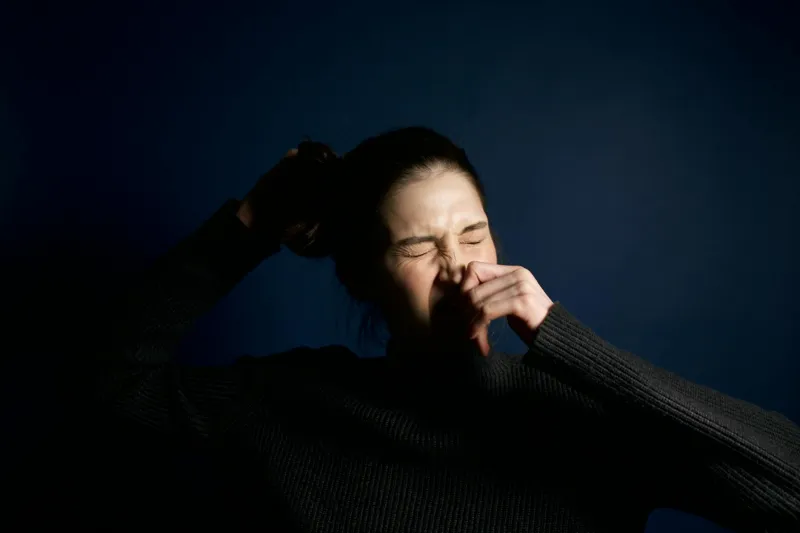
You step out of a dark movie theater into blazing afternoon sunlight, and before you can even squint, you're sneezing uncontrollably. Your friends look at you like you're having an allergic reaction to sunshine itself, but you know it happens every single time you encounter bright light after darkness.
If this sounds familiar, congratulations: you're part of an exclusive genetic club that most people don't even know exists.
The Sneeze That Science Finally Explained
What you're experiencing has an official name — the photic sneeze reflex, also known by the memorable acronym ACHOO (Autosomal Compelling Helio-Ophthalmic Outburst). It affects roughly 18-35% of the population, making it more common than having green eyes or being left-handed.
For decades, people who experienced this phenomenon assumed they were either imagining things, having an allergic reaction, or dealing with some personal quirk. In reality, they were demonstrating a fascinating example of how individual brains can be wired differently from birth.
The photic sneeze reflex is a legitimate genetic trait that runs in families and follows predictable inheritance patterns. If one parent has it, there's about a 50% chance their children will too. It's what geneticists call an autosomal dominant trait — you only need one copy of the gene variant to experience the effect.
Your Brain's Mixed-Up Wiring
The sneeze response happens because of what scientists call "neural cross-talk" — essentially, your brain gets its signals mixed up. Here's what's actually happening in those milliseconds between bright light and involuntary sneezing:
When bright light hits your eyes, it triggers the pupillary light reflex — your pupils automatically constrict to protect your retina. This signal travels along the optic nerve to your brain stem, where it's processed by the parasympathetic nervous system.
In people with the photic sneeze reflex, this light signal somehow gets misdirected to the trigeminal nerve, which controls sneezing. The trigeminal nerve interprets this crossed signal as nasal irritation and triggers the sneeze response.
It's like having faulty electrical wiring in your house — flip the bathroom light switch and somehow the kitchen garbage disposal turns on. The signal goes where it's supposed to go, but it also goes somewhere it shouldn't.
When Sneezing Becomes a National Security Issue
The photic sneeze reflex might seem like a harmless quirk, but it caught the attention of military researchers for a very practical reason: fighter pilots were sneezing at extremely inconvenient moments.
Imagine flying a high-speed aircraft and suddenly encountering bright sunlight — perhaps emerging from cloud cover or changing direction relative to the sun. For pilots with the photic sneeze reflex, this could trigger an uncontrollable sneezing fit lasting several seconds. When you're traveling at hundreds of miles per hour and need to maintain precise control, involuntary sneezing becomes a genuine safety hazard.
The U.S. Air Force actually studied this phenomenon and found that photic sneezers were more likely to experience dangerous moments during flight operations. Some military aviation programs now screen for the trait during pilot selection.
 Photo: U.S. Air Force, via idata.over-blog.com
The same concern applies to other high-stakes situations where sudden bright light exposure could be dangerous — driving through tunnels, operating heavy machinery, or performing precision tasks outdoors.
Why Most People Have Never Heard of This
Despite affecting roughly one in three people, the photic sneeze reflex remains relatively unknown outside scientific circles. There are several reasons for this:
It's not a medical problem: Since the reflex doesn't cause harm in most situations, it rarely comes up in doctor visits or health discussions. People who experience it often just accept it as "one of those things" about themselves.
It's inconsistent: The reflex doesn't trigger every time someone encounters bright light. It typically requires a sudden transition from dim to bright conditions, and individual sensitivity varies. This inconsistency makes people less likely to recognize it as a distinct phenomenon.
It's brief: Unlike chronic conditions or obvious physical traits, photic sneezing lasts only a few seconds and then disappears. It's easy to forget about until it happens again.
Cultural assumptions: Many people assume sneezing in sunlight must be related to allergies, dust, or other environmental factors. The idea that light itself could trigger sneezing seems counterintuitive.
The Genetics Behind the Sneeze
Researchers have identified the specific genetic region associated with photic sneezing — a location on chromosome 2 that influences how the trigeminal nerve processes signals. However, the exact mechanism is still being studied.
What scientists do know is that the trait shows clear inheritance patterns. Studies of families with photic sneezers consistently find that the reflex passes from parent to child in predictable ways. Twin studies have confirmed that genetics, not environment, determines whether someone experiences the photic sneeze reflex.
Interestingly, the intensity and trigger sensitivity can vary even within families. Some people sneeze once when encountering bright light, others sneeze multiple times. Some are triggered by relatively moderate light changes, while others need dramatic brightness shifts.
Other Surprising Sneeze Triggers
The photic sneeze reflex belongs to a family of unusual sneeze triggers that reveal how interconnected our nervous systems really are. Some people sneeze when they pluck their eyebrows, eat dark chocolate, or even think about bright light.
There's also the "snatiation reflex" — sneezing triggered by eating large meals — and sneezing caused by sexual thoughts or orgasm. All of these represent examples of neural cross-talk, where signals intended for one system accidentally activate another.
These reflexes remind us that our bodies are complex networks where seemingly unrelated systems can influence each other in unexpected ways.
Living With Your Light-Sensitive Sneeze
If you're a photic sneezer, there's no cure or treatment needed — it's simply how your nervous system works. However, you can take some practical steps to minimize inconvenience:
Wear sunglasses: Reducing the intensity of light transitions can decrease the likelihood of triggering the reflex.
Plan transitions: When moving from dark to bright environments, try to make the transition gradually rather than suddenly.
Warn others: If you're in a situation where sudden sneezing could be disruptive or concerning to others, a quick explanation can prevent confusion.
The Real Wonder of Neural Quirks
The photic sneeze reflex represents something remarkable about human neurobiology — we're all wired slightly differently. Your brain's unique architecture creates responses and experiences that are entirely normal for you but completely foreign to others.
This isn't a malfunction or a problem to solve. It's evidence of the incredible diversity in how human nervous systems can be organized while still functioning perfectly well. Your light-triggered sneezing is just as valid and interesting as someone else's ability to wiggle their ears or curl their tongue.
The next time bright sunlight makes you sneeze, remember: you're not broken, allergic, or imagining things. You're experiencing a fascinating example of how genetics can create unique neural pathways that make each human brain wonderfully, distinctly different.