Your Phone Battery Charging Habits Are Stuck in 2009 — And Your Battery Is Paying for It
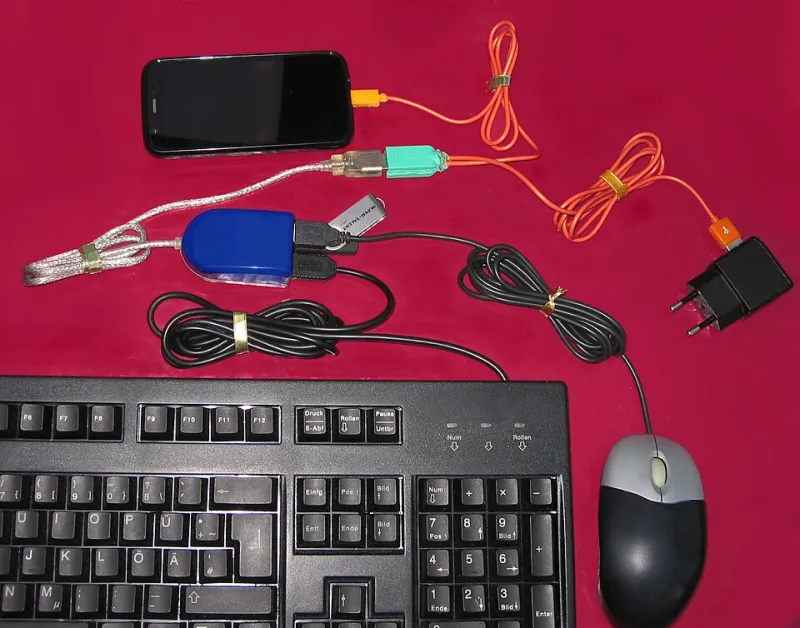
Photo: Hans Haase, CC BY-SA 4.0, via Wikimedia Commons
The Charging Ritual You Inherited From a Different Era
Ask around and you'll find that a surprising number of people still follow a fairly consistent set of phone charging rules: don't charge overnight, let the battery drain all the way down before plugging in, and unplug as soon as it hits 100%. Some people even speak about these habits with a kind of quiet pride, as if battery maintenance were a form of discipline.
The rules feel technical. They feel responsible. And they are almost entirely wrong for the device in your pocket right now.
The advice isn't made up — it just belongs to a previous generation of battery technology that hasn't shipped inside a mainstream smartphone since the early 2000s.
Where the Rules Came From
The original source is nickel-cadmium (NiCd) batteries, which were common in consumer electronics through the 1990s. These batteries suffered from something called the memory effect: if you repeatedly charged them before they were fully depleted, they would essentially "forget" part of their capacity and start behaving as if the partial charge point was their true zero. The fix was to fully discharge them before every charge cycle, which reset the memory and preserved capacity.
Nickel-metal hydride (NiMH) batteries, which followed, had a milder version of the same problem. The advice carried over.
By the time lithium-ion batteries became standard — which happened in consumer phones around the late 1990s and became nearly universal by the mid-2000s — the memory effect was essentially gone. Lithium-ion chemistry doesn't work that way. But the advice had already been passed down, reprinted in tech blogs, and absorbed into the general understanding of how batteries behave. It became conventional wisdom precisely as it became obsolete.
How Modern Lithium-Ion Batteries Actually Work
Lithium-ion batteries don't have a memory. What they do have is a finite number of charge cycles — and the way those cycles are counted matters a lot.
A charge cycle isn't one plug-in session. It's the equivalent of going from 0% to 100% in cumulative terms. If you charge from 50% to 100% twice, that counts as one cycle. This means that partial charges don't wear out your battery faster — they actually preserve it, because you're spending fewer full cycles over the lifetime of the battery.
The real enemy of lithium-ion longevity is voltage stress. Keeping a battery at 100% for extended periods puts the cells under higher voltage than they're designed to sustain comfortably. Similarly, draining to 0% and leaving it there stresses the chemistry in the opposite direction. Battery engineers describe the sweet spot as somewhere between 20% and 80% — a range that minimizes stress on the cells and extends the number of healthy cycles the battery can complete.
Most modern phones know this. Apple introduced optimized charging that learns your overnight schedule and holds the charge at 80% until just before you wake up. Android manufacturers have added similar features. Your phone is already trying to protect its battery from the exact behavior the old advice encouraged.
Why the Myths Keep Circulating
Part of the persistence is generational transmission — parents and older colleagues pass along the rules they learned with genuine good intentions. Part of it is the fact that the advice sounds plausible regardless of the underlying technology. "Don't overcharge it" feels like common sense in the same way "don't overfill a gas tank" does, even though the mechanisms are completely different.
There's also a confirmation bias problem. If you follow the old rules and your battery holds up reasonably well for two years, you credit the ritual. If you don't follow them and your battery degrades, you wonder if you should have. The feedback loop isn't clean enough to correct the belief.
Tech accessory marketing hasn't helped. There's an entire category of "battery health" apps, charging cables with built-in cutoffs, and power banks marketed around anxiety about overcharging — anxiety that the actual battery engineers at Apple, Samsung, and Google have largely designed around already.
What Actually Damages Your Battery
The factors that genuinely shorten lithium-ion lifespan are worth knowing because they're different from what most people watch out for.
Heat is the biggest one. Charging your phone while it's sitting in direct sunlight, or running a GPS app while the phone is plugged in during a hot summer drive, does measurable damage over time. The battery doesn't care much about when you charge it — it cares enormously about temperature during charging.
Fast charging is a more nuanced issue. It's convenient and mostly fine for occasional use, but consistently using maximum-speed charging generates more heat and does create slightly more wear than standard charging. It's not a reason to avoid fast charging entirely, but it's a real trade-off the old myths never addressed.
And yes, letting the battery sit at 0% for extended periods — like leaving a phone in a drawer uncharged for months — does cause real degradation. That's the one scenario where the old "full discharge" advice creates an actual problem.
The Takeaway
The best thing you can do for your phone battery right now is to stop trying to manage it like it's 2003. Enable optimized charging if your phone offers it, try to keep the charge somewhere in the middle range when you have the choice, and keep it out of extreme heat. The rituals you inherited were invented for a battery that no longer exists — and following them with a modern device is a bit like checking your car's carburetor. The intention is good. The technology moved on.