The Wellness Industry Wants You to Boost Your Immune System — Immunologists Think That's a Terrible Idea
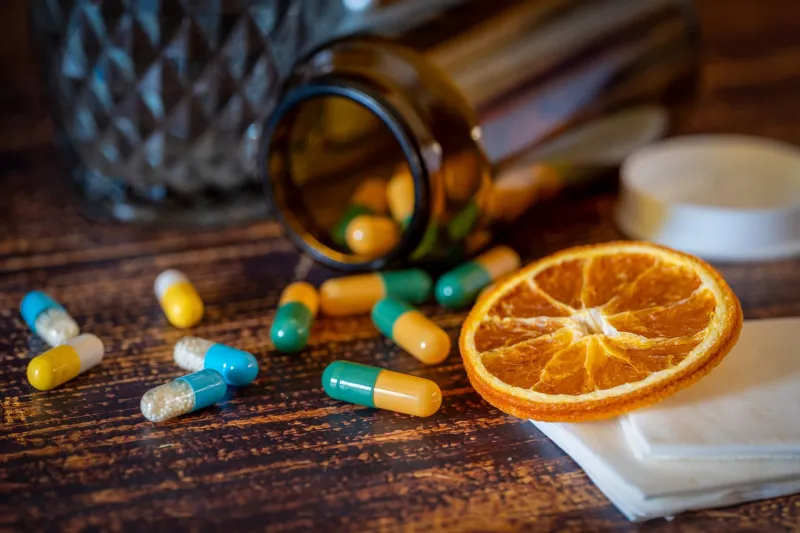
Walk through any health food store or scroll through a wellness brand's Instagram and you'll encounter the same promise in a dozen different forms: this supplement, this juice, this mushroom extract will boost your immune system. It's one of the most common claims in the wellness industry, appearing on products that collectively generate billions of dollars in annual sales.
There's just one problem. The immunologists who spend their careers studying how the immune system actually works largely agree that "boosting" it is not only a meaningless goal — it's a potentially dangerous one. And the word itself has become so untethered from clinical reality that it functions almost entirely as marketing language.
What Your Immune System Is Actually Doing
The immune system is not a single organ or a simple on/off switch. It's a sprawling, layered network of cells, proteins, tissues, and organs that have to perform a remarkably delicate balancing act every moment of your life.
On one side, it needs to detect and respond to genuine threats — bacteria, viruses, parasites, and abnormal cells that could become cancerous. On the other side, it needs to leave everything else completely alone: your own healthy tissue, the food you eat, the harmless bacteria that live in your gut and help you digest it.
When that balance works correctly, you barely notice your immune system at all. When it tips too far in either direction, the consequences range from annoying to life-threatening.
An immune system that's underperforming leaves you vulnerable to infections you'd normally fight off. But an immune system that's overperforming — one that's been, in the language of supplement labels, "boosted" — is the underlying mechanism behind some of the most serious conditions in medicine.
When the Immune System Is Too Active
Autoimmune diseases occur when the immune system mistakes the body's own tissue for a foreign threat and attacks it. Rheumatoid arthritis, lupus, multiple sclerosis, type 1 diabetes, Crohn's disease — these are all conditions where an overactive immune response causes the damage. Collectively, they affect tens of millions of Americans.
 Photo: Crohn's disease, via www.seekpng.com
Allergies are another form of immune overactivity. When someone goes into anaphylactic shock after eating a peanut, their immune system isn't failing — it's responding with catastrophic intensity to something that poses no real danger. The immune system has decided a harmless protein is an existential threat, and the inflammatory response it triggers is what causes the emergency.
Cytokine storms — which became widely discussed during the COVID-19 pandemic — are perhaps the most dramatic example. In severe cases of certain infections, the immune system generates such an overwhelming inflammatory response that it begins destroying the patient's own lung tissue. In those cases, treatment involves actively suppressing the immune system, not encouraging it.
The point isn't that a strong immune system is bad. It's that the immune system's value comes from its precision and regulation, not its intensity. Asking it to work harder, without any specific target, is a bit like asking your car's engine to rev higher while it's parked in the garage. More activity isn't inherently better activity.
What 'Boost' Actually Means on a Label
Here's something that doesn't appear on any supplement bottle: a clinical definition of "immune boosting."
That's because there isn't one. The FDA does not recognize "boosts immune system" as a health claim, which is why you'll often see careful phrasing like "supports immune health" or "promotes a healthy immune response" instead. These are structure/function claims, which have a much lower regulatory bar than disease claims. Companies can make them without proving they're true, as long as they include a disclaimer that the FDA hasn't evaluated the statement.
This matters because the supplements most commonly marketed for immune support — high-dose vitamin C, zinc, elderberry, echinacea — have a complicated relationship with the scientific evidence. Some show modest effects in specific contexts. Zinc lozenges taken within the first 24 hours of a cold may reduce its duration slightly. Vitamin C supplementation shows benefits mainly in people who are already deficient or who undergo extreme physical stress like marathon running.
But for the average American eating a reasonably varied diet, most of these supplements are providing nutrients the body already has enough of. The excess gets processed and excreted. You're not building a stronger immune system — you're producing expensive urine.
What Actually Supports Immune Function
This is where the real story gets almost frustratingly unglamorous. The things that genuinely support immune function are not new, not exotic, and not profitable enough to build a marketing campaign around.
Sleep is probably the most underappreciated immune intervention available. During sleep, the body produces and releases cytokines — proteins that help coordinate immune responses. Chronic sleep deprivation measurably impairs immune function, and studies have shown that people who sleep fewer than six hours a night are significantly more likely to catch a cold when exposed to a rhinovirus than those who sleep seven or more hours.
Stress management matters because chronic psychological stress suppresses immune function through the sustained release of cortisol, which is immunosuppressive by design. Short-term stress primes the immune system; long-term stress wears it down.
Regular moderate exercise has well-documented benefits for immune surveillance — the process by which immune cells circulate and monitor the body for threats. Note the word moderate. Intense overtraining, interestingly, can temporarily suppress immune function, which is why elite athletes sometimes get sick more often than recreational exercisers.
A varied diet with adequate micronutrients provides the raw materials the immune system needs. Deficiencies in vitamin D, zinc, and vitamin C do impair immune function. But supplementing beyond sufficiency doesn't improve it further — the system uses what it needs and discards the rest.
Not smoking and drinking alcohol only moderately both have direct, measurable effects on immune competence. These aren't suggestions — they're among the most evidence-supported interventions available.
The Takeaway
The immune system is not a muscle that gets stronger the harder you push it. It's a finely calibrated system that works best when it's supported, not stimulated. The billion-dollar market built around boosting it is selling a concept that immunologists don't recognize as a meaningful goal — and in some cases, chasing that goal could do more harm than good. The most effective immune strategy most people can adopt is genuinely boring: sleep enough, manage stress, move regularly, eat reasonably well, and stop smoking. No capsule required.