Your Elementary School Taste Map Was Wrong — And It All Started With a Mistranslated German Paper
The Diagram That Defined Childhood Science
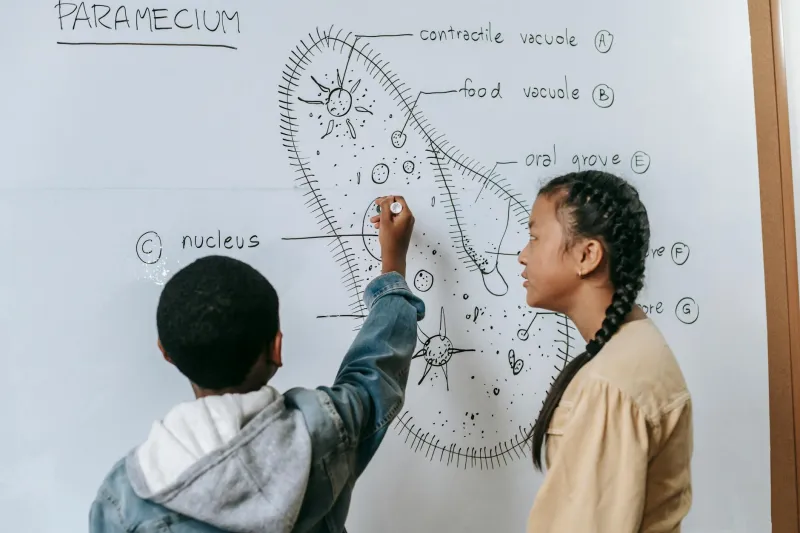
If you attended elementary school in America anytime after 1940, you probably remember the tongue map. That neat little diagram showed your tongue divided into distinct zones: sweet flavors detected at the tip, salty along the sides, sour further back, and bitter at the very back. Teachers used it to explain how taste works, and students dutifully memorized it for tests.
There's just one problem: it's completely wrong.
How a German Scientist Accidentally Fooled the World
The tongue map traces back to David Hänig, a German researcher who published a study in 1901 examining taste sensitivity across different areas of the tongue. Hänig's work was actually quite sophisticated for its time. He carefully measured how much of each taste type was needed to trigger a response in different tongue regions.
 Photo: David Hänig, via static1.srcdn.com
What Hänig found was subtle: some areas of the tongue were slightly more sensitive to certain tastes than others. The tip was marginally better at detecting sweet flavors, the sides showed a tiny advantage with salty tastes, and so on. But these were minor differences — every part of the tongue could detect every type of taste.
The trouble started in 1942 when Edwin Boring, a Harvard psychologist, decided to translate and summarize Hänig's work for an English-speaking audience. Boring's interpretation transformed Hänig's nuanced findings into something much more dramatic. Where the German scientist had found small variations in sensitivity, Boring's summary suggested distinct, separate zones.
From Research Paper to Classroom Poster
Boring's mistranslation might have remained buried in academic literature, but textbook publishers loved the simplicity of the tongue map. It was visual, easy to understand, and perfect for explaining a complex sensory system to children. By the 1950s, the diagram had become standard in American science education.
The map's appeal wasn't just pedagogical — it felt intuitive. Most people could relate to the idea that different parts of their mouth experienced different flavors. It seemed to explain why you might taste sweetness at the front when eating ice cream, or why bitter medicine seemed to hit the back of your tongue.
What Your Tongue Actually Does
Modern taste research tells a completely different story. Taste buds containing all five types of taste receptors — sweet, salty, sour, bitter, and umami — are distributed across your entire tongue. When you eat something sweet, receptors throughout your mouth respond, not just those at the tip.
The fifth taste, umami, makes the tongue map even more obsolete. Discovered by Japanese scientist Kikunae Ikeda in 1908, umami describes the savory, meaty flavor found in foods like mushrooms, aged cheese, and soy sauce. Western science largely ignored umami until the 1980s, partly because it didn't fit neatly into the four-zone model that had become so entrenched in education.
 Photo: Kikunae Ikeda, via cf.shopee.co.id
Your actual taste experience involves thousands of taste buds working together, combined with smell receptors in your nose that contribute most of what we think of as "flavor." The process is far more integrated and complex than any simple map could capture.
Why the Myth Survived So Long
The tongue map persisted for decades because it solved a teaching problem, even if it created a scientific one. Educators needed a way to explain taste to children, and the map provided a concrete, memorable framework. Once it appeared in textbooks, it gained the authority of print and the momentum of tradition.
Scientific accuracy often takes a back seat to pedagogical convenience. The tongue map joined other classroom staples like the food pyramid and simplified models of atomic structure — useful teaching tools that sacrifice precision for clarity.
The map also survived because most people never had reason to question it. Unlike other scientific misconceptions that might affect daily life, believing in taste zones didn't cause obvious problems. Your tongue worked the same way whether you understood the real science or not.
The Correction That Took Decades
By the 1970s, taste researchers knew the tongue map was wrong, but changing educational materials took much longer. Textbook publishers were reluctant to abandon a diagram that teachers found useful and students could easily remember. Many science educators weren't aware of the updated research, continuing to teach what they had learned decades earlier.
The internet age finally began to chip away at the myth. Science websites and updated curricula started presenting the correct information, though many classrooms still display the old tongue map today.
Beyond the Map: What This Teaches Us About Scientific Truth
The tongue map story reveals how scientific "facts" can become entrenched through repetition rather than evidence. A single mistranslation, amplified by the educational system, shaped how millions of people understood their own bodies.
It also shows how the desire for simple explanations can override scientific accuracy. The real story of taste — involving complex interactions between multiple sensory systems — is messier than a neat diagram, but it's also more interesting.
Next time you taste something delicious, remember that your entire tongue is working together to create that experience. The neat zones you learned about in elementary school never existed, but the remarkable complexity of your actual taste system is far more impressive than any textbook diagram could capture.