Airlines Know Exactly How to Board Planes Faster — They Just Make More Money Doing It Wrong
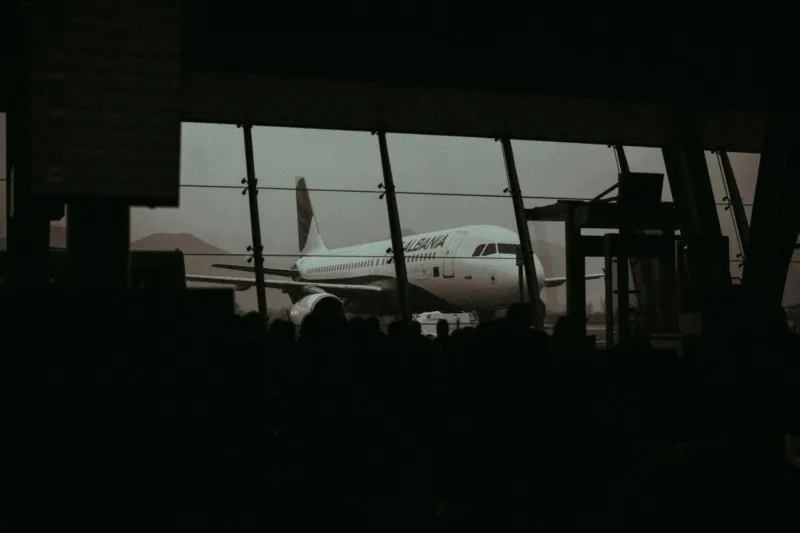
The Daily Frustration That's Actually Intentional
You're standing in the gate area watching the boarding process unfold with mathematical precision — the wrong kind of precision. First class boards first, obviously. Then elite status holders. Then premium economy. Then zones 1 through 5, each announced with the kind of authority that suggests this system was designed by efficiency experts.
Except it wasn't. And the researchers who study boarding efficiency have been screaming into the void for decades about how airlines could cut boarding time in half if they actually wanted to.
They don't want to. And once you understand why, every delayed departure starts to make perfect financial sense.
The Science Airlines Pretend Doesn't Exist
Dr. Jason Steffen, an astrophysicist at the University of Nevada, got frustrated enough with airline boarding to actually solve the problem mathematically. Using computer simulations and real passenger tests, he identified the optimal boarding sequence.
 Photo: University of Nevada, via www.dlrgroup.com
 Photo: Dr. Jason Steffen, via www.metal-archives.com
His method: Board passengers in alternating rows, starting from the back, with only window seats first, then middle seats, then aisle seats. So passenger 30A boards, then 28A, then 26A, and so on.
The result? Steffen's method is about twice as fast as the zone system most airlines use. It eliminates the bottlenecks that occur when multiple passengers try to stow luggage in the same overhead bin area simultaneously.
But here's the kicker — even boarding completely randomly from back to front is faster than the zone systems airlines actually use.
The Revenue Engine Disguised as Customer Service
Airlines know about this research. They've known for years. The reason they don't implement faster boarding has nothing to do with operational complexity and everything to do with revenue optimization.
The current boarding system creates artificial scarcity and visible class distinctions that drive upgrade sales. When economy passengers watch first-class customers board leisurely while they wait in crowded gate areas, it reinforces the value proposition of paying for priority access.
American Airlines openly admits that "preferred boarding" generates significant ancillary revenue. Passengers pay $9-25 for earlier boarding group access. Credit card partnerships offer boarding priority as a key benefit. Elite status programs use boarding order as a primary perk.
Faster boarding would eliminate these revenue streams entirely.
The Psychological Manipulation of Waiting
The boarding process is deliberately designed to be slightly unpleasant for non-premium passengers. Long waits create anxiety about overhead bin space. Watching others board first establishes a clear hierarchy. The gate agent's repeated announcements about "priority boarding" reinforce what you're missing.
This isn't accidental. Airlines employ behavioral economists who understand exactly how waiting affects purchasing decisions. A passenger who experiences boarding frustration is more likely to buy priority access next time.
The optimal boarding sequence would eliminate this psychological pressure entirely, removing a key motivation for customers to pay for upgrades.
What Actually Works: The Forgotten Research
Beyond Steffen's method, researchers have tested numerous boarding alternatives:
Random boarding: Passengers board in any order. Consistently faster than zone systems because it eliminates artificial bottlenecks.
Outside-in: Window seats first, then middle, then aisle across the entire plane. Reduces aisle blocking significantly.
Back-to-front by row: Simple but effective. Each row boards completely before the next row starts.
Mythbusters tested several methods on a real airplane and confirmed that almost anything is faster than the zone system. Even boarding by birthday month outperformed traditional airline methods.
The International Embarrassment
Some budget airlines have quietly implemented faster boarding methods. Southwest's open seating eliminates assigned seats entirely, resulting in some of the fastest boarding times in the industry. Ryanair uses random boarding with minimal fanfare.
 Photo: Southwest, via hpmleadership.com
But major carriers resist change because their business models depend on the revenue generated by boarding inefficiency. They've essentially chosen to make flying more frustrating in exchange for higher profits.
The Real Cost of Fake Efficiency
Delayed departures cost airlines money through crew overtime, missed connections, and gate fees. But these costs are apparently smaller than the revenue lost by eliminating upgrade opportunities.
Passengers pay the real price: wasted time, increased stress, and the constant pressure to buy their way out of artificially created problems.
The Method That Would Actually Work
If airlines wanted to optimize for speed instead of revenue, here's what boarding would look like:
- Pre-assign overhead bin space by seat number
- Board window seats first, back to front
- Then middle seats, back to front
- Finally aisle seats, back to front
- Eliminate all zone announcements and priority boarding
Boarding time would drop from 30-45 minutes to 15-20 minutes. Passenger stress would decrease significantly. Gate areas would be less crowded.
But airlines would lose millions in upgrade revenue, so it will never happen.
The Frustration by Design
The next time you're waiting to board and wondering why the process feels so unnecessarily complicated, remember: it's not incompetence. It's not tradition. It's not operational constraints.
It's a carefully engineered system designed to extract maximum revenue from your desire to avoid frustration. The boarding process is working exactly as intended — just not for you.
Airlines have the solution. They've had it for years. They're just making too much money from the problem to implement it.