The Temperature Everyone Memorized Is Based on 150-Year-Old Math — And It's Wrong
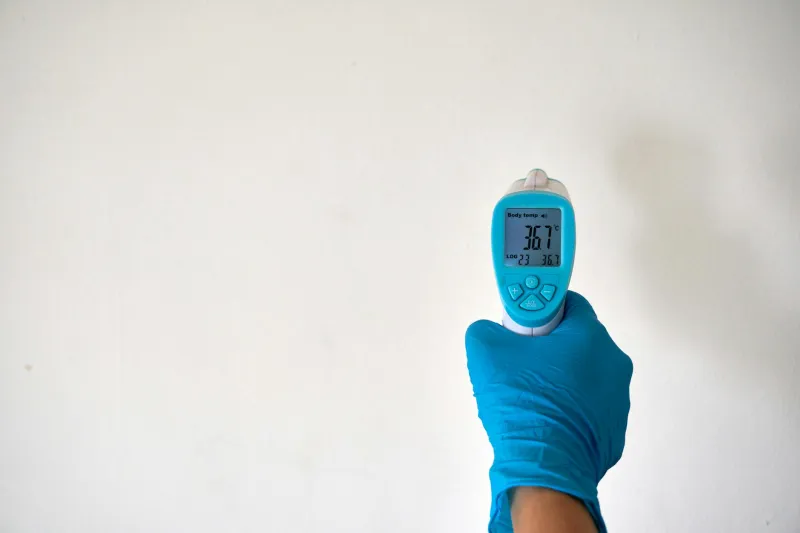
Every American parent knows the drill. Kid feels warm? Grab the thermometer. Above 98.6°F? Time to worry. Below it? Just tired.
But here's what might shock you: that sacred number we've all memorized isn't actually the standard doctors use anymore. And it never really should have been.
The German Doctor Who Started It All
The 98.6°F obsession traces back to Carl Reinhold August Wunderlich, a German physician who, in 1868, took over a million temperature readings from 25,000 patients. Using the best thermometers available at the time — which weren't great — he calculated the average human body temperature and converted it to the suspiciously precise 98.6°F.
Wunderlich's work was groundbreaking for its time. The problem? Those 19th-century thermometers were about as accurate as guessing. They took 20 minutes to get a reading, and even then, the margin of error was significant. Yet somehow, his calculated average became gospel.
What Modern Medicine Actually Knows
Fast-forward to today, and researchers with vastly superior equipment have discovered something Wunderlich couldn't have known: normal body temperature isn't a single number. It's a range that shifts based on dozens of factors.
Your temperature naturally fluctuates throughout the day, typically running about a degree lower in the morning and higher in late afternoon. Age matters too — older adults tend to run cooler, while young children often register higher. Women's temperatures shift with their menstrual cycles. Even where you measure makes a difference: oral, rectal, and ear readings can vary by a full degree.
Studies using modern digital thermometers consistently show that the actual average human body temperature is closer to 97.5°F to 98.2°F. Some researchers argue it's been dropping over the past century and a half, possibly due to improved health and living conditions reducing the low-level inflammation our ancestors lived with.
The Fever Line That Isn't Really a Line
So if 98.6°F isn't the magic baseline, what constitutes a fever? This is where it gets interesting — and more complicated than most people realize.
Most medical professionals now consider anything above 100.4°F (38°C) a fever worth attention. But even that's not absolute. A temperature of 99.5°F might be perfectly normal for you if you typically run warm, or it could signal the start of illness if you usually register 97°F.
The key isn't hitting some arbitrary number — it's recognizing what's unusual for your body. A person whose normal temperature is 97.2°F experiencing a reading of 99.8°F might be fighting off something significant, even though they're technically below the "fever" threshold.
Why We're Still Stuck on 98.6
If medical professionals have moved beyond the 98.6°F standard, why hasn't everyone else? The answer lies in the power of a memorable number.
98.6°F is specific enough to sound scientific but simple enough to remember. It's been printed on thermometer packages, repeated in health classes, and passed down through generations of worried parents. When everyone "knows" the same fact, questioning it feels unnecessary.
Plus, having a single number is convenient. It's much easier to tell parents "watch for 98.6°F" than to explain individual baselines, daily fluctuations, and contextual factors. The simplified version stuck because complexity doesn't fit on a thermometer box.
What This Means for Your Medicine Cabinet
Understanding that normal body temperature is individual and variable doesn't mean throwing out your thermometer. Instead, it means using it more intelligently.
Pay attention to your family's typical temperatures when everyone's healthy. Notice patterns — does your teenager always run a degree warmer than your spouse? Does everyone register lower readings first thing in the morning?
When someone feels unwell, compare their current temperature to their personal normal, not to 98.6°F. A fever isn't just about crossing a numerical threshold; it's about your body behaving differently than usual.
And remember that temperature is just one piece of the puzzle. Someone can be genuinely sick with a normal temperature, just as someone can register 99.5°F and feel perfectly fine.
The Takeaway
The next time you automatically reach for the thermometer and start doing mental math against 98.6°F, remember you're comparing against a 150-year-old average that was never meant to be a universal standard.
Your body has its own normal, and that's the only number that really matters. The fever threshold isn't a line in the sand — it's more like a general neighborhood where you might want to start paying closer attention.
Wunderlich's work was impressive for 1868, but maybe it's time we stopped practicing medicine like it's still the 19th century.