That Famous Lightning Rule Is Wrong — The Empire State Building Gets Hit 25 Times a Year
The Phrase Everyone Knows Is Wrong
You've heard it countless times: "Lightning never strikes the same place twice." It's used to comfort people after disasters, encourage risk-takers to try again, and explain why certain unlikely events won't repeat. The problem? Lightning absolutely does strike the same place twice — and it does it all the time.
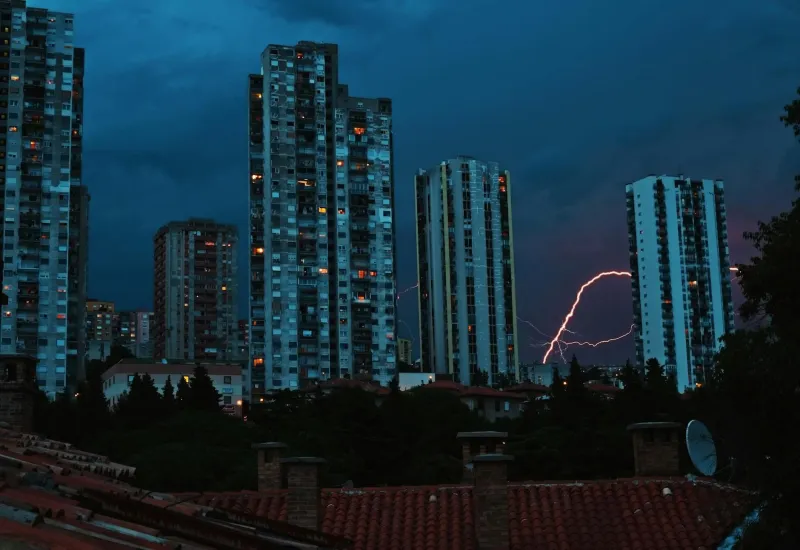
The Empire State Building gets struck by lightning approximately 25 times per year. The Willis Tower in Chicago, the Space Needle in Seattle, and virtually every other tall structure in America collect lightning strikes like they're collecting raindrops. Some buildings get hit multiple times during a single storm.
So how did one of the most easily disproven statements in the English language become one of the most repeated?
From Battlefield Wisdom to Weather Mythology
The phrase didn't start as a claim about meteorology. It began as military shorthand about battlefield survival odds. The idea was that if you survived one extremely dangerous situation, the statistical chances of facing the exact same deadly scenario again were low.
This made sense in its original context. If a soldier survived a direct artillery strike on his position, it was unlikely that enemy gunners would target that exact same spot again during the same battle. The phrase was about tactical probability, not natural phenomena.
But somewhere along the way, this military idiom migrated from discussions of warfare strategy into conversations about weather patterns. The metaphorical became literal, and a statement about battlefield tactics transformed into a supposed law of nature.
What Lightning Actually Seeks Out
Lightning doesn't randomly choose where to strike. It follows predictable physical principles, and those principles make repeat strikes not just possible, but inevitable.
Lightning takes the path of least electrical resistance from cloud to ground. Tall objects, metal structures, and elevated points naturally provide easier paths for electrical discharge than surrounding areas. This is why lightning rods work — they give lightning an attractive target and a safe path to the ground.
The Empire State Building isn't getting struck repeatedly by cosmic coincidence. Its height, metal construction, and prominent position in Manhattan's skyline make it an irresistible target for every electrical storm that passes over New York City. The building's lightning rod system safely channels these strikes to the ground, protecting both the structure and surrounding areas.
Roy Sullivan, a park ranger in Virginia's Shenandoah National Park, was struck by lightning seven times during his 35-year career. His repeated encounters weren't random bad luck — they were the predictable result of spending decades outdoors in an area with frequent thunderstorms and elevated terrain.
How Motivational Speaking Became Meteorology
The transformation of this phrase from military wisdom to weather myth reflects something larger about how information spreads in American culture. Catchy sayings that sound authoritative often get repeated without anyone checking whether they're actually true.
By the mid-20th century, "lightning never strikes the same place twice" had become standard motivational advice. Self-help books, inspirational speakers, and well-meaning friends used it to encourage people to take risks, try again after failures, or stop worrying about repeat disasters.
The phrase worked because it sounded scientific and definitive. Lightning seemed random and mysterious to most people, so a statement about its behavior carried the weight of natural law. Nobody bothered to verify whether lightning actually worked the way the saying claimed.
The Real Science of Lightning Patterns
Meteorologists have been tracking lightning patterns for decades, and the data consistently shows that certain locations get struck repeatedly. Mountains, towers, trees, and other elevated objects are lightning magnets. Some individual trees are struck multiple times per year.
Lightning detection networks can now track individual strikes with precise accuracy. These systems routinely record multiple strikes hitting the same buildings, trees, and geographic features during single storms. The idea that lightning avoids places it's already hit isn't just wrong — it's the opposite of how electrical discharge actually works.
Skyscrapers in major cities are essentially giant lightning rods. Their height and metal construction make them preferred targets for every storm that passes overhead. Building designers know this and plan for it with comprehensive lightning protection systems.
Why the Myth Persists Despite the Evidence
The phrase survives because it serves a psychological purpose that has nothing to do with meteorology. People use it to process anxiety about rare but devastating events. Telling someone that "lightning never strikes the same place twice" isn't really about lightning — it's about hope and statistical comfort.
The myth also persists because most people don't have direct experience with lightning strikes. Unlike other easily disproven claims, this one doesn't contradict daily experience for most Americans. You can go your entire life without witnessing a lightning strike, let alone multiple strikes in the same location.
Meanwhile, the buildings and structures that do get struck repeatedly aren't usually occupied by people when it happens. Lightning protection systems do their job quietly and effectively, so the repeated strikes that disprove the myth rarely make headlines.
The Takeaway About Language and Truth
The lightning myth reveals how easily motivational language can masquerade as scientific fact. When we use phrases borrowed from luck and probability to explain natural phenomena, we often end up believing the metaphor instead of understanding the reality.
Lightning strikes the same places constantly because physics is consistent, not random. The next time someone uses this phrase to explain why you shouldn't worry about repeat disasters, remember that the Empire State Building's lightning rod system gets a workout every single storm season.
Sometimes the most comforting sayings are the ones that have the least connection to how the world actually works.