Your Grandma's Kitchen Ritual Is Spreading Salmonella Everywhere
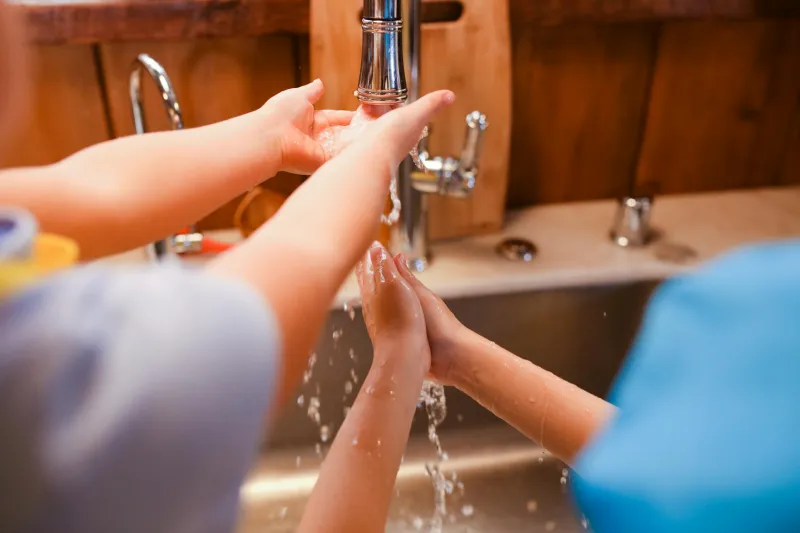
Walk into any American kitchen during dinner prep, and you'll likely witness a ritual passed down through generations: the careful rinsing of raw chicken under cold running water. It's such a common practice that most people never question it—after all, washing removes germs, right?
Wrong. And not just a little wrong, but spectacularly, dangerously wrong.
The Great Kitchen Contamination Experiment
Food safety researchers have spent years documenting what actually happens when you rinse raw chicken, and the results would make your grandmother reconsider her entire approach to poultry prep. Using special cameras and bacterial markers, scientists discovered that washing raw chicken doesn't remove bacteria—it launches it.
When water hits raw chicken, it creates what food microbiologists call "splash contamination." Those innocent-looking water droplets carry Salmonella, Campylobacter, and other dangerous pathogens up to three feet away from your sink. Your countertops, dish towels, coffee maker, and anything else within splash range becomes a bacterial landing zone.
The USDA conducted studies using a harmless bacteria substitute to track contamination patterns. In 60% of cases, people who washed their chicken ended up with bacteria on their sink. In 26% of cases, the bacteria spread to lettuce sitting nearby—lettuce that many people eat raw.
Where This Habit Actually Came From
The chicken-washing tradition isn't some ancient wisdom—it's a relatively recent development that made sense in a different era. Before modern food safety regulations, chickens often arrived at markets with visible dirt, feathers, and other debris. A quick rinse actually did remove visible contaminants.
But today's commercially processed chicken goes through multiple cleaning stages at USDA-inspected facilities. The birds are cleaned, inspected, and packaged under strict sanitary conditions. That chicken in your grocery store is already as clean as rinsing will make it—and probably cleaner.
The habit persisted because it feels logical. We wash fruits and vegetables, so why not meat? We wash our hands to remove germs, so washing chicken should work the same way. This intuitive thinking, combined with well-meaning advice passed down through families, created a widespread practice that actually undermines food safety.
The Temperature Truth That Makes Washing Pointless
Here's what actually kills bacteria on chicken: heat. Salmonella dies instantly at 165°F, and even lower temperatures will eliminate it given enough time. When you cook chicken to the proper internal temperature, you're destroying every dangerous microorganism that might be present.
Rinsing, on the other hand, can't remove bacteria that's embedded in the meat's surface or hiding in tiny crevices. Water simply doesn't have the antimicrobial power to eliminate these pathogens. You're essentially trying to solve a chemistry problem with physics.
Food safety experts put it bluntly: if you're relying on rinsing to make your chicken safe, you're approaching food safety backward. Proper cooking temperature is your only reliable defense against foodborne illness from poultry.
What Professional Kitchens Actually Do
Restaurant kitchens—where food safety violations can shut down a business—don't rinse chicken. Professional chefs and food service workers are trained to handle raw poultry with careful containment: designated cutting boards, immediate cleanup, and thorough hand washing.
The professional approach focuses on preventing cross-contamination rather than trying to "clean" the meat itself. Raw chicken goes directly from package to cutting board to pan, with careful attention to everything it touches along the way.
The Real Kitchen Safety Protocol
Food safety experts recommend a completely different approach to chicken preparation. First, designate specific cutting boards and utensils for raw meat—never use the same surfaces for vegetables or other foods without thorough washing in between.
Skip the sink entirely. Take chicken directly from its packaging to your cutting board, then immediately dispose of the packaging. After handling raw chicken, wash your hands with soap for at least 20 seconds, then clean and sanitize any surfaces the meat touched.
Use a meat thermometer to ensure your chicken reaches 165°F internal temperature. This single step does more for food safety than any amount of pre-cooking rinsing.
Why Old Habits Die Hard
The chicken-washing habit persists partly because the contamination it causes is invisible. You can't see bacteria spreading across your kitchen, so the practice feels harmless—even beneficial. People continue the ritual because it provides a sense of control and cleanliness, even when it's achieving the opposite.
Social reinforcement plays a role too. When respected family members and cooking shows demonstrate chicken washing, it appears to be proper technique. Breaking this cycle requires understanding that good intentions don't always lead to good outcomes.
The Bottom Line
Your kitchen sink isn't a decontamination station—it's a potential bacterial distribution center when it comes to raw chicken. The safest approach is also the simplest: handle raw chicken carefully, cook it thoroughly, and save the rinsing for your vegetables.
Sometimes the most helpful thing we can do is stop helping. In the case of chicken preparation, less intervention leads to better results. Your grandmother's heart was in the right place, but food science has moved on—and your kitchen will be safer when you do too.